
On this page
What are fascia and soffit, and why do they matter?
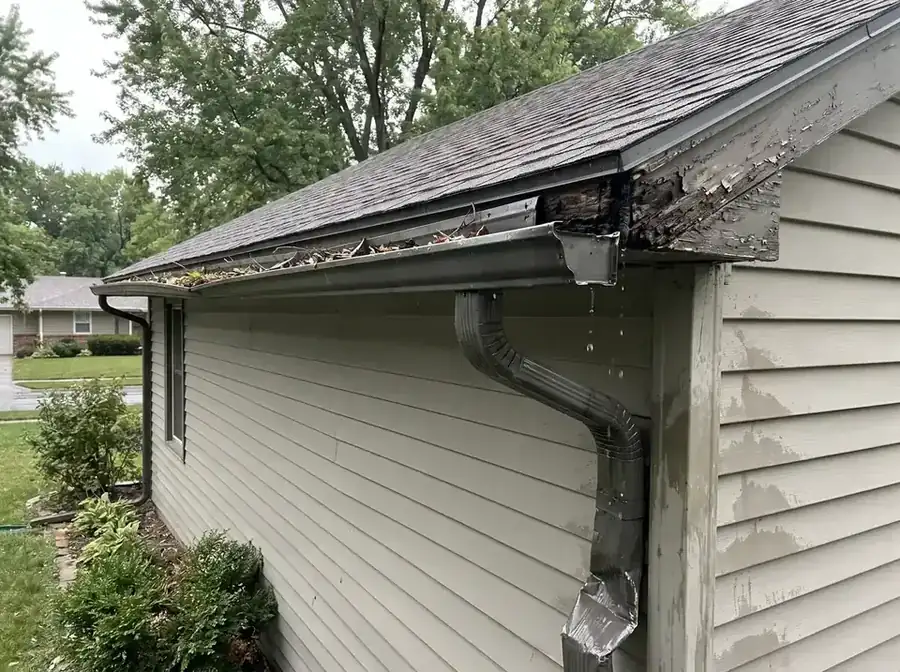
Fascia is the board that closes the ends of the rafters and carries the gutter. Soffit is the underside of the eave. Together they keep weather, insects and animals out of the roof structure, and the fascia takes the whole weight of the gutter system. Langford & Sons Gutters connects callers with independent local gutter contractors, who give the estimates and do the work.
Most Plano houses are brick veneer on the walls with painted wood or composite trim at the eaves. That trim is the part of the exterior most exposed to water, and it is where maintenance problems show first.
Why does fascia rot behind a gutter?
- Overflow. A blocked gutter spills over the back as well as the front and soaks the board.
- No drip edge. Water clings to the shingle edge and runs down the fascia.
- Leaking joints. A dripping corner keeps the mitered end of two boards wet.
- Failed paint. Texas sun breaks down paint on south and west faces; bare wood takes up water.
- Spike holes. Each old gutter spike is a path for water into the board.
- Finger-jointed trim. Some builder-grade trim is made of short pieces glued end to end, and the joints open as it ages.
How is rotten fascia repaired?
- Take down the gutter along the affected length.
- Remove the damaged board back to sound wood, cutting at a rafter.
- Check the rafter tails and roof deck edge behind it.
- Fit new board, primed on all faces and ends.
- Install drip edge over the top if it was missing.
- Caulk and paint to match.
- Re-hang the gutter on new hidden hangers at the correct pitch.
Which fascia materials are used?
| Material | Rot resistance | Paint | Notes |
|---|---|---|---|
| Primed pine or fir | Low to moderate | Needs regular repainting | Cheapest; matches existing wood |
| Cedar | Good | Paint or stain | More stable; costs more |
| Fiber cement | Does not rot | Holds paint well | Heavy; common replacement in Texas |
| Cellular PVC | Does not rot | Optional | Moves with heat; needs correct fixing |
| Aluminum fascia wrap | Protects wood beneath | None needed | Covers, but does not cure, rot |
What about soffits and vents?
Soffit panels on Plano houses are commonly plywood, hardboard or fiber cement with strip or grille vents. They suffer when gutter overflow or roof leaks wet them from above. Sagging panels, stains and gaps at the wall are the signs. Repair means replacing panels and keeping the vents clear so the attic can breathe, which matters in a climate where attics get very hot.
| Sign | Likely cause | Action |
|---|---|---|
| Stain line on soffit below the gutter | Water behind the gutter | Fit drip edge; repair the board |
| Panel sagging | Wet from above; fixings failed | Replace the panel |
| Gap at a corner | Rot in the fascia end | Replace the fascia section |
| Wasps or birds entering | Hole or missing vent screen | Close and re-screen |
How do I check my own eaves?
- Walk round the house after rain and look for drips from the soffit.
- Look along each fascia for peeling paint and dark patches.
- Note any gutter section that has dropped.
- From a window or the ground, check whether metal flashing shows between shingles and gutter.
- Look at corners, where two boards meet.
Should fascia be wrapped in metal?
Aluminum fascia wrap, or cladding, covers the board with formed metal in a matching color so it never needs painting. It works well over sound wood. Over rotten wood it hides the problem and traps moisture, so any soft board should be replaced before wrapping. Ask the contractor to show you the wood before it is covered.
What affects the price
Fascia work is priced by the foot of board replaced, the material, the height and whether painting is included. It is nearly always done together with gutter repair or replacement, since the gutter has to come off anyway. Ask for the carpentry to be shown as its own line on the quote.